
 By
By 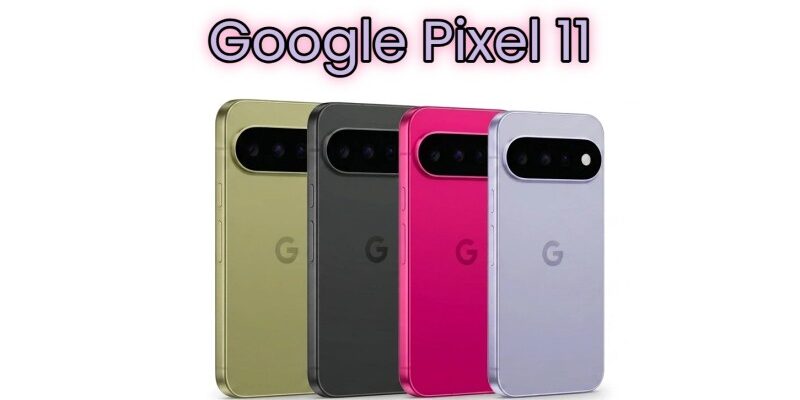
Key Highlights
- Google Tensor G6 processor with Titan M3 security chip
- 6.3-inch Actua OLED display with up to 120Hz refresh rate
- 48MP main camera with upgraded low-light performance
- 5x telephoto camera with up to 30x Super Zoom
- 4,985mAh battery with 30W wired and 25W wireless charging
Google has launched the Google Pixel 11 in India as its latest standard flagship smartphone, bringing a new Tensor G6 processor, upgraded cameras and deeper Gemini integration. The phone sits below the Pixel 11 Pro models but retains several of the features that make Google’s premium phones distinctive.
The interesting part about the Google Pixel 11 isn’t simply the Tensor G6 chip. Google has also made meaningful changes to the camera system while keeping the phone relatively compact.
The camera bar is now 40 percent thinner than the previous generation, according to Google. The company has also increased the light sensitivity of the new 48MP main sensor and added 30x Super Zoom to the 5x telephoto camera.
| Feature | Details |
|---|---|
| Brand | |
| Model | Pixel 11 |
| Display | 6.3-inch Actua OLED |
| Refresh rate | 60–120Hz adaptive |
| Processor | Google Tensor G6 |
| RAM | 12GB |
| Storage | 256GB / 512GB |
| Rear cameras | 48MP + 13MP + 10.8MP |
| Telephoto | 5x optical zoom |
| Front camera | 10.5MP autofocus |
| Battery | 4,985mAh |
| Wired charging | 30W |
| Wireless charging | Up to 25W Qi2.2 |
| OS | Android 17 |
| Protection | IP68 |
| Weight | 197g |
| Starting price | ₹89,999 |
Design & Build
Google continues with the familiar horizontal camera-bar design, but the company says the camera bar is thinner than the previous generation. The phone measures around 152.8 x 72 x 8.6mm and weighs 197 grams.
The relatively moderate weight is worth noting at a time when several flagship phones are pushing well beyond 200 grams. An IP68 rating also gives the device proper dust and water resistance.
Colour options include Pistachio, Hibiscus, Frost and Obsidian.
Display
The Google Pixel 11 features a 6.3-inch Actua OLED panel with an adaptive refresh rate reaching 120Hz. Brightness is rated at up to 3,000 nits peak, with Gorilla Glass Victus 2 protection.
For everyday use, the 120Hz panel should make scrolling and animations feel considerably smoother than a conventional 60Hz screen. The high brightness rating should also help outdoors, although peak brightness figures are not the same as sustained full-screen brightness.
For Netflix, YouTube and gaming, the 6.3-inch size strikes a sensible middle ground between immersion and one-handed usability.
Performance and Android 17
At the heart of the Pixel 11 is Google’s new Tensor G6 chipset alongside the Titan M3 security chip.
Tensor chips have traditionally been designed around Google’s AI and computational photography workloads rather than chasing benchmark records. That philosophy continues here. The new platform is intended to handle on-device AI, camera processing and Gemini features while keeping the Pixel experience tightly integrated with Android.
The phone ships with Android 17, and Google’s Pixel software strategy remains one of its biggest advantages.
Interestingly, the Pixel 11 doesn’t need an enormous amount of RAM to make its AI story interesting. The 12GB configuration gives it plenty of headroom for everyday multitasking.
Camera
The rear system consists of a 48MP primary camera, 13MP ultrawide and 10.8MP 5x telephoto.
The telephoto is the standout addition. Optical zoom is useful because it maintains considerably more detail than simply cropping into a standard wide-angle image.
The phone supports up to 30x Super Zoom, although users shouldn’t interpret that number as equivalent to 30x optical zoom. At extreme magnifications, computational processing becomes increasingly important.
The 10.5MP front camera includes autofocus and supports 4K video recording.
A high megapixel number alone doesn’t determine camera quality. Google’s image processing, HDR handling, stabilization and computational photography will play a major role in the final results.
Battery & Charging
The cpacks a 4,985mAh battery, with 30W wired and up to 25W Qi2.2 wireless charging.
The capacity is respectable, but charging speed is noticeably conservative compared with Chinese flagship phones that can now charge at 80W, 100W or even faster.
Google’s approach is clearly more focused on software optimization and wireless charging convenience than charging-speed competition.
Storage & Connectivity
The Google Pixel 11 comes with 256GB or 512GB storage and 12GB RAM. There is no indication of microSD expansion.
Connectivity includes 5G, Wi-Fi, NFC, Bluetooth, USB-C and satellite positioning systems including NavIC, Galileo, GLONASS and BeiDou.
Price and Availability in India
Google Pixel 11 Comes in two Variants.
- 12GB + 256GB – ₹89,999
- 12GB + 512GB – ₹1,04,999
Colours include Pistachio, Hibiscus, Frost and Obsidian.
Google’s India Store currently lists launch benefits including up to ₹10,000 instant cashback, a ₹9,000 exchange bonus and up to 24 months of no-cost EMI on eligible purchases.
The phone goes on sale from August 20, 2026.
At ₹89,999, the Pixel 11 enters an extremely competitive flagship category. Samsung Galaxy S26 — a better choice for buyers who prioritise gaming performance, Samsung’s feature-rich software and a broader hardware ecosystem. iPhone 17 — worth considering for buyers already invested in Apple’s ecosystem or those who prioritise iOS and long-term app support. OnePlus 14 — likely more attractive to buyers who prioritise charging speed and performance hardware.
The Pixel 11’s biggest advantage is its combination of Google’s camera processing, clean Android experience and AI features.
Is the Pixel 11 Price Justified?
At ₹89,999, the Google Pixel 11 isn’t trying to win the specification war. Its value comes from Google’s software, camera processing and long-term update policy.
The 256GB version makes more sense for most buyers. Spending another ₹15,000 for 512GB is worthwhile mainly for users who record lots of video or intend to keep the phone for several years.
Pros and Cons
Pros
- Strong camera-focused hardware
- Tensor G6 and on-device AI
- 120Hz OLED display
- 25W wireless charging
- Seven years of updates
- Compact flagship size
Cons
- Expensive compared with performance-focused rivals
- Charging is slower than several competing flagships
- Tensor isn’t positioned primarily as a gaming-first platform
Who Should Buy the Pixel 11?
Best for:
Camera enthusiasts, Pixel fans, AI-focused users and buyers who want a relatively compact premium Android phone.
Consider alternatives if:
Gaming performance, ultra-fast charging or maximum hardware specifications are your top priorities.
FAQ
What is the Pixel 11 price in India?
The Pixel 11 starts at ₹89,999 for 12GB+256GB.
What processor does Pixel 11 use?
It uses Google’s Tensor G6 processor.
Does Pixel 11 support wireless charging?
Yes, it supports up to 25W Qi2.2 wireless charging.
How many cameras does Pixel 11 have?
It has three rear cameras, including a 5x telephoto camera.
How long will Pixel 11 receive updates?
Google promises seven years of OS, security and Pixel Drop updates.
When does Pixel 11 go on sale in India?
Sales begin August 20, 2026.





Comments