
 By
By 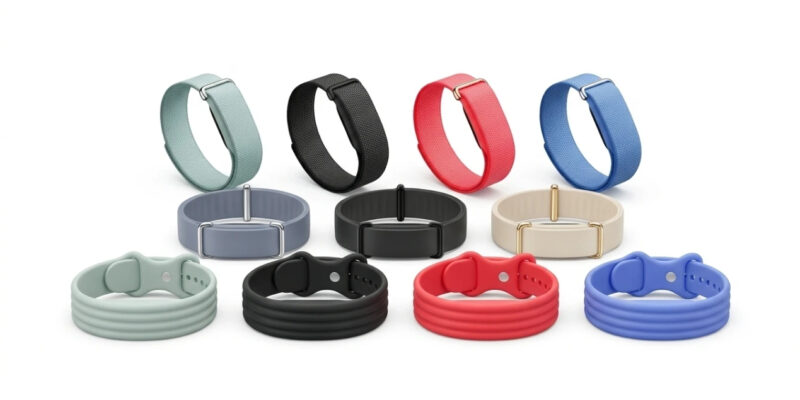
Key Highlights
- Fitbit Air is Google’s first screenless fitness tracker.
- It tracks heart rate, heart rhythm, SpO2, HRV, sleep and activity.
- The tracker weighs just 12g with the band and is designed for 24/7 wear.
- Battery life is rated at up to seven days, with five minutes of charging providing up to a day of use.
- Google Health Coach with Gemini provides personalised health and fitness guidance through the Google Health app.
Google has brought the Fitbit Air to India, expanding its wearable lineup with a screenless fitness tracker designed around continuous health and sleep monitoring rather than smartwatch-style notifications and apps. The device was originally introduced globally in May 2026 at $99.99 and is now set to reach Indian buyers at ₹13,999.
The central idea behind Fitbit Air is simplicity. Instead of putting a display on the wrist, Google uses a small sensor-equipped tracker that records health and activity information throughout the day and presents the results through the Google Health app. This makes it particularly relevant for users who want continuous tracking without another screen demanding their attention.
| Feature | Details |
|---|---|
| Brand | |
| Model | Fitbit Air |
| Launch Date | 30 sept 2026 |
| India Price | ₹13,999 |
| Design | Screenless fitness tracker |
| Weight | 12g with band; 5.2g tracker only |
| Dimensions | 34.9 x 17 x 8.3mm |
| Sensors | Optical heart rate, SpO2, skin temperature, accelerometer, gyroscope |
| Health Tracking | Heart rate, HRV, SpO2, sleep, heart rhythm, skin temperature |
| Activity Tracking | Automatic workout detection, 40+ exercise modes |
| Battery | Up to 7 days |
| Fast Charging | Up to 1 day of use from 5 minutes |
| Connectivity | Bluetooth LE |
| Compatibility | Android 11+ / iOS 16.4+ |
| Water Resistance | 50m |
| App | Google Health |
| AI | Google Health Coach with Gemini |
| Colours | Obsidian, Berry, Lavender, Fog |
| Availability | India from October 2 |
Design and Build
The biggest physical difference is the complete absence of a display. Fitbit Air uses a small pebble-shaped tracker attached to a wristband, with health information and activity summaries viewed on the connected smartphone instead.
The tracker is designed for continuous wear, including during sleep. Google offers a Performance Loop Band with the device, while the Active Band is aimed at workouts and the Elevated Modern Band provides a more traditional bracelet-style appearance.
Google’s specifications list 50-metre water resistance, while the tracker weighs only 12g with the band. The lightweight construction is particularly relevant for sleep tracking, where a bulky smartwatch can be less comfortable to wear overnight.
Health Tracking and Sensors
Health monitoring is the main reason to consider Fitbit Air. It continuously tracks heart rate and can monitor heart rhythm for signs associated with atrial fibrillation, alongside SpO2, resting heart rate, heart-rate variability, sleep stages and sleep duration.
The tracker also includes sensors for skin temperature, movement and activity recognition. Google says Fitbit Air can automatically detect common workouts and provide a summary through the Google Health app. More than 40 exercise modes are supported according to the Indian retail listing reported by Gadgets 360.
These features are intended for wellness and fitness tracking rather than medical diagnosis. Google specifically notes that its heart-rate and sleep features are not intended for medical purposes.
Google Health Coach and AI Features
Fitbit Air is closely tied to Google’s new Google Health app and Health Coach. The Health Coach uses Gemini to provide personalised guidance based on information collected from compatible Google and Fitbit devices.
The tracker itself does not provide a screen for displaying AI responses. Instead, users access their metrics and coaching through the smartphone app. Google Health can combine activity, sleep and other health information to provide personalised guidance.
Some Health Coach functionality requires a Google Health Premium subscription. Google says Fitbit Air buyers receive a three-month trial, while Health Premium in India is priced at ₹499 per month or ₹4,999 per year.
Battery Life and Charging
Fitbit Air is rated for up to seven days of battery life on a charge. Google also claims that five minutes of charging can provide up to a full day of use.
The seven-day figure is a manufacturer estimate based on testing with pre-production hardware and software, so actual endurance can vary depending on usage and enabled features. This is important because continuous sensor tracking can affect battery consumption.
For users primarily interested in sleep tracking, the long claimed battery life also reduces the need to remove the tracker regularly for charging.
Connectivity and Compatibility
Fitbit Air does not operate as a standalone smartwatch. A compatible smartphone and Google Account are required for setup and use of the Google Health app.
Google says the device works with phones running Android 11 or newer and iOS 16.4 or newer. Synchronisation uses Bluetooth Low Energy, with internet connectivity and location permissions required on the connected phone.
The screenless design also means there are no on-wrist notifications, apps or live information panels. That is a deliberate part of the product’s positioning rather than a missing feature.
Price in India and Availability
The Google Fitbit Air is priced at ₹13,999 in India. It will be available from October 2 through the Google Store, Flipkart, Croma, Reliance Digital, Vijay Sales and other authorised retailers, according to the launch information provided by Google.

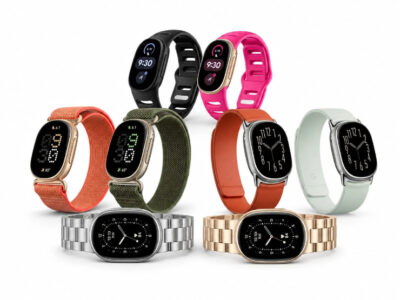
1.line Performance Loop 2.line Active Loop 3.line Elevated Loop
The tracker is available in Obsidian, Berry, Lavender and Fog colour options. The standard Performance Loop Band comes with the tracker, while Active Loop Band and Elevated Modern Loop Band options are available separately. Google’s launch offer includes a three-month trial of Google Health Premium, which provides access to Google Health Coach.
Fitbit Air vs Alternatives
At ₹13,999, Fitbit Air sits close to Fitbit’s own Charge 6, which currently sells around the ₹15,000 level in India, according to current retail-price tracking. Charge 6 adds a colour display, built-in GPS and smartwatch-style features, while Fitbit Air instead focuses on a lighter, screen-free form factor.
| Alternative | Why Consider It? | Fitbit Air Difference |
|---|---|---|
| Fitbit Charge 6 | Display, GPS and on-wrist features | Smaller, screenless design |
| Samsung Galaxy Fit3 | Much lower price and AMOLED display | More focused on continuous Fitbit/Google Health ecosystem |
| Xiaomi Smart Band 10 | Display and longer claimed battery life | Fitbit Air removes the screen and emphasises health coaching |
The Galaxy Fit3 launched in India at ₹4,999, while Xiaomi’s Smart Band 10 is positioned in a substantially lower price segment.
Final Verdict: Should You Buy It?
Fitbit Air is primarily designed for people who want continuous health and sleep tracking without wearing a smartwatch. Its combination of a 12g screenless design,’s ₹13,999 India price positions it as a screenless health tracker rather than a traditional smart band. Its value depends heavily on whether Google’s health-coaching ecosystem and display-free design health sensors, long claimed battery life and Google Health integration gives it a clearly different purpose from conventional fitness bands.
It makes less sense for users who want notifications, GPS, music controls or live workout information directly on their wrist. The absence of a display is the defining feature of Fitbit Air, but it is also the biggest compromise compared with conventional fitness trackers.
Best for: Users prioritising sleep, health and activity tracking in a lightweight, distraction-free wearable.
Consider alternatives if: You want a screen, on-device workout information, GPS or smartwatch-style features.
Bottom line: Fitbit Air’s ₹13,999 India price positions it as a screenless health tracker rather than a traditional smart band. Its value depends heavily on whether Google’s health-coaching ecosystem and display-free design match the way you want to use a wearable.


Comments