
 By
By 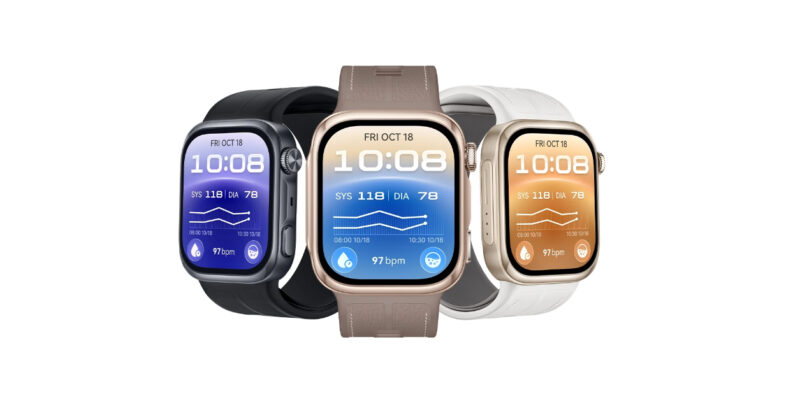
Key Highlights
- Huawei Watch D3 is now available in Europe with CE-MDR-certified blood pressure monitoring
- Uses an inflatable mechanical airbag built into the watch strap for blood pressure measurements
- Supports 24-hour Ambulatory Blood Pressure Monitoring (ABPM)
- 1.92-inch AMOLED display with up to 3,000 nits peak brightness
- Up to six days of claimed battery life with typical use
- Huawei is offering launch bundles including a free Huawei Scale 3 in selected markets
Huawei has started selling the Watch D3 in Europe, bringing its latest health-focused smartwatch to the region with a feature that remains uncommon among wearables: blood pressure measurement using a mechanical inflatable airbag built into the strap. The Watch D3 is designed to take blood pressure readings throughout the day and night rather than relying on a single manual measurement.
The watch also introduces pre- and post-exercise blood pressure measurements, allowing users to check their readings before a workout and again afterward. Huawei has retained the CE marking under the EU Medical Device Regulation for its blood-pressure monitoring system.
Beyond blood pressure, the Watch D3 includes ECG, heart-rate, SpO2 and temperature monitoring, along with Health Glance and a Health Community feature that lets users keep track of selected health information from family members. The watch is also slimmer than the Watch D2, measuring 11.3mm thick and weighing approximately 40g without the strap.
| Feature | Details |
|---|---|
| Brand | Huawei |
| Model | Watch D3 |
| Launch Market | Europe |
| Display | 1.92-inch AMOLED |
| Resolution | 408 × 480 pixels |
| Pixel Density | 328 ppi |
| Peak Brightness | Up to 3,000 nits |
| Case Material | Aluminium alloy |
| Dimensions | 46.5 × 41 × 11.3mm |
| Weight | Approx. 40g without strap |
| Health Sensors | Heart rate, ECG, SpO2, temperature, differential pressure |
| Blood Pressure | Mechanical airbag + pressure sensor |
| ABPM | Yes, 24-hour monitoring |
| GNSS | GPS, GLONASS, BeiDou, Galileo, QZSS |
| Bluetooth | Bluetooth 6.0 |
| NFC | Yes |
| Battery | Up to 6 days typical use |
| ABPM Battery Life | Up to 1 day |
| Charging | Wireless |
| Compatibility | Android 8.0+, iOS 13.0+ |
| Colours | Black, Pale Gold, Mocha Gold |
| UK Price | £399.99 |
Blood Pressure Monitoring
The blood-pressure system is the main reason to consider the Watch D3.
Instead of estimating blood pressure using only optical sensors, Huawei has integrated a miniature inflatable airbag into the watch strap. During a measurement, the airbag inflates around the wrist and applies pressure while a differential pressure sensor records the changes needed to calculate blood pressure.
Huawei says the Watch D3’s system uses the oscillometric method and is CE-MDR certified as a medical device in Europe. The company also supports 24-hour Ambulatory Blood Pressure Monitoring, or ABPM, which automatically records readings at set intervals.
The watch can provide daytime and nighttime averages, as well as systolic and diastolic blood-pressure trends. Huawei says the ABPM system follows European Society of Hypertension recommendations for measurement intervals.
This is particularly useful for users who need to understand how blood pressure changes throughout the day rather than relying on an occasional reading.
However, the Watch D3 should not be treated as a replacement for medical care. Huawei itself warns users not to diagnose conditions, change medication or make treatment decisions based solely on readings from the watch.
Pre- and Post-Exercise Blood Pressure
The Huawei Watch D3 adds a dedicated pre- and post-exercise blood-pressure feature.
Before a workout, the watch can check blood pressure and alert the user if the reading is too high for intense exercise. After exercise, Huawei says the watch can take another measurement within two minutes to help users understand how their blood pressure changed.
This makes the feature more useful for people who regularly monitor their cardiovascular response to exercise rather than simply collecting resting measurements.
Health Tracking
Blood pressure is only one part of the Watch D3’s health system. The watch also includes an optical heart-rate sensor, ECG sensor, SpO2 monitoring, temperature sensing and a nine-axis IMU containing an accelerometer, gyroscope and magnetometer.
Huawei’s Health Glance feature can bring multiple health measurements together into a single report, while Health Insights combines health information with sleep and activity data to show longer-term patterns.
The Watch D3 also introduces Health Community, which is designed for families. Users can view selected health information from family members and receive alerts when the system detects unusual readings.
The availability of individual health features can vary by country and region.
Design & Display
The Huawei Watch D3 measures 46.5 × 41 × 11.3mm and weighs around 40g without the strap. Huawei has reduced the thickness compared with the Watch D2, which measured 13.3mm. The newer model also uses a narrower airbag strap intended to make continuous blood-pressure monitoring more comfortable.
The display is a 1.92-inch AMOLED panel with a 408 × 480-pixel resolution and 328ppi density. Huawei rates its peak brightness at up to 3,000 nits, which should help with outdoor visibility.
The watch is available in Black, Pale Gold and Mocha Gold, with different strap materials depending on the colour.
Battery Life
Huawei claims up to six days of battery life with typical use. Its testing conditions include six blood-pressure measurements and five ECG measurements per day, continuous heart-rate monitoring, sleep tracking, SpO2 monitoring, notifications and around 90 minutes of exercise per week.
However, continuously running ABPM has a major impact on battery life. Huawei rates the Watch D3 for up to one day with ABPM enabled, based on its specified test conditions.
That trade-off is important: the Watch D3 can function as a conventional smartwatch for several days, but users who want continuous blood-pressure monitoring should expect to charge it much more frequently.
Connectivity & Smart Features
The Huawei Watch D3 supports Bluetooth 6.0, NFC and built-in GNSS with GPS, GLONASS, BeiDou, Galileo and QZSS. It also includes a microphone and speaker for supported calling and smartwatch functions.
The watch works with Android 8.0 or later and iOS 13.0 or later. Some health and NFC-related features depend on the country and region.
Price & Availability in Europe
The Huawei Watch D3 is now available across European markets.
- UK – £399.99 (Approx. Rs.50,700)
- Germany – €450 (~Rs.49,000)
- Poland – PLN 1,599 (~Rs.39,800)
In the UK, it is priced at £399.99 and is sold through Huawei’s online store, Amazon and participating retailers. Launch promotions include a Huawei Scale 3 smart scale from Huawei’s online store, while Huawei is also offering six times Rewards Points during the promotional period. Buyers can also receive 10 months of Bupa Well+ health services, valued at £200, under the stated UK promotion.
In Germany, Huawei lists the Watch D3 at €450, while Amazon has offered it for €430 with the promotional code HUAWEIDE20. Huawei’s store promotion gives buyers a choice between a Huawei Scale 3 and FreeBuds SE 4 ANC in the launch bundle.
Other European markets have their own pricing and promotional packages. For example, Huawei’s Polish store currently lists the Watch D3 at PLN 1,599 against a reference price of PLN 1,799.
Huawei Watch D3 vs Watch D2
The Huawei Watch D3 is more of an evolution of the D2 than a complete redesign.
| Feature | Watch D3 | Watch D2 |
|---|---|---|
| Thickness | 11.3mm | 13.3mm |
| Weight | Approx. 40g without strap | Heavier |
| Display | 1.92-inch AMOLED | 1.82-inch AMOLED |
| BP Monitoring | Mechanical airbag | Mechanical airbag |
| 24-hour ABPM | Yes | Yes |
| ECG | Yes | Yes |
| Battery | Up to 6 days typical | Up to 6 days typical |
| Key New Feature | Pre/post-exercise BP monitoring | — |
The D3’s biggest physical improvement is its slimmer construction. Huawei has also updated the health-monitoring software and added exercise-specific blood-pressure measurements, while retaining the core airbag-based BP system.
Final Verdict: Should You Buy the Huawei Watch D3?
The Huawei Watch D3 is primarily designed for people who specifically want regular blood-pressure monitoring from a wearable. Its mechanical airbag system and CE-MDR certification distinguish it from smartwatches that estimate blood pressure using optical sensors alone.
Best for: Users who need regular blood-pressure tracking, people interested in 24-hour BP trends, and families who want Health Community monitoring.
Consider alternatives if: You mainly want exercise tracking, notifications and general smartwatch features and do not need blood-pressure monitoring. Conventional fitness watches can be thinner and may offer longer battery life.
Bottom line: The Watch D3’s biggest strength is its specialised blood-pressure hardware. The slimmer design, exercise BP monitoring and broader health-tracking tools make it a more complete version of Huawei’s D-series concept, although the battery-life trade-off becomes significant when 24-hour monitoring is enabled.









Comments