
 By
Key Highlights
- Xiaomi 18 Pro and Xiaomi 18 Pro Max launched globally at an event in Paris on November 17, 2026.
- Both smartphones feature dual 200MP Leica cameras and a secondary rear display.
- The global Xiaomi 18 Pro gets a 6,000mAh battery, while the Pro Max packs a 7,050mAh battery.
- The Pro uses Snapdragon 8 Elite Gen 6, while the Pro Max features Snapdragon 8 Elite Extreme Gen 6.
- Both models run HyperOS 4 based on Android 17 and support Xiaomi Privacy Display technology.
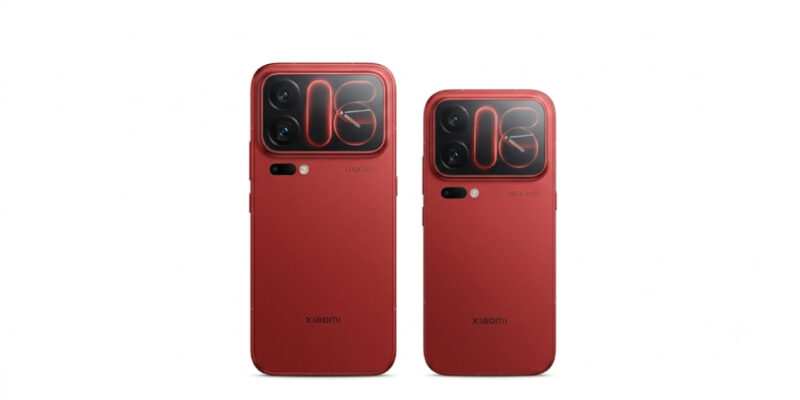
Xiaomi has introduced the Xiaomi 18 Pro and 18 Pro Max to international markets at an event in Paris, bringing its latest camera-focused flagships outside China. launched in China on September, the both smartphones retain their distinctive rear displays, dual 200MP Leica camera systems and hardware-based Privacy Display technology in their international versions.
Both devices are powered by Qualcomm’s latest Snapdragon 8 Elite Gen 6-series processors and feature AMOLED displays with adaptive refresh rates. However, the global versions come with smaller batteries than their Chinese counterparts, marking one of the most significant regional differences in the new lineup.
The Xiaomi 18 Pro targets buyers who prefer a relatively compact flagship, while the Pro Max offers a larger display, a more advanced processor and a higher-capacity battery.

Xiaomi 18 Pro
| Feature | Xiaomi 18 Pro | Xiaomi 18 Pro Max |
|---|---|---|
| Brand | Xiaomi | Xiaomi |
| Launch Date | November 17, 2026 | November 17, 2026 |
| Display | 6.4-inch AMOLED | 6.9-inch AMOLED |
| Resolution | 2436 × 1120 | 2624 × 1208 |
| Refresh Rate | 1–120Hz | 1–120Hz |
| Processor | Snapdragon 8 Elite Gen 6 | Snapdragon 8 Elite Extreme Gen 6 |
| RAM | 12GB | 12GB / 16GB |
| Storage | 256GB / 512GB | 256GB / 512GB / 1TB |
| Rear Display | 2.7-inch AMOLED | 2.9-inch AMOLED |
| Rear Cameras | 200MP + 200MP + 50MP | 200MP + 200MP + 50MP |
| Front Camera | 50MP | 50MP |
| Battery | 6,000mAh | 7,050mAh |
| Wired Charging | 90W | 100W |
| Wireless Charging | 50W | 50W |
| Operating System | HyperOS 4, Android 17 | HyperOS 4, Android 17 |
| Colours | Black, White, Velvet Red, Cosmic Blue | Black, White, Velvet Red, Cosmic Blue |
| Water Resistance | IP68 | IP68 |
Specifications refer to the international models. Memory configurations and features may vary by market.
Design & Build
The Xiaomi 18 Pro series retains its distinctive design, with a secondary display integrated into the rear camera area. This screen gives both smartphones a different appearance from conventional flagship devices.
The Xiaomi 18 Pro features a 2.7-inch rear AMOLED display, while the Pro Max gets a slightly larger 2.9-inch panel. Both screens can display notifications, navigation information and pinned content. They can also function as viewfinders, allowing users to frame selfies and videos using the rear cameras.
The phones are available in Black, White, Velvet Red and Cosmic Blue. Both international models carry an IP68 rating for dust and water resistance, although the Chinese versions also advertise IP69 protection.
Display & Privacy Features
The Xiaomi 18 Pro features a 6.4-inch AMOLED display with a 2436 × 1120-pixel resolution. The Pro Max uses a larger 6.9-inch panel with a 2624 × 1208-pixel resolution.
Both displays support an adaptive 1–120Hz refresh rate, up to 300Hz touch sampling and peak brightness of up to 4,000 nits. The LTPO technology allows the refresh rate to adjust according to the displayed content, helping balance smoothness and power consumption.
One of the more unusual additions is Xiaomi Privacy Display. It uses hardware-level display technology to reduce screen visibility from side angles, making it useful when viewing private messages or sensitive information in public.
Users can configure privacy settings for supported applications and notifications. Xiaomi also offers a Privacy Notice feature that can alert users when someone nearby appears to be looking at their screen. However, the technology reduces side visibility rather than guaranteeing complete privacy.
Performance
The Xiaomi 18 Pro runs on Qualcomm’s Snapdragon 8 Elite Gen 6 processor, while the Pro Max uses the higher-positioned Snapdragon 8 Elite Extreme Gen 6 chipset.
Both processors use a 2nm manufacturing process and are paired with LPDDR5X RAM and UFS 4.1 storage. Xiaomi also includes its 3D IceLoop cooling system to manage heat during demanding workloads.
The Pro Max’s processor gives it a higher position in the lineup, while the standard Pro still offers flagship-class hardware. However, independent testing will be needed to establish differences in sustained gaming performance, temperatures and battery efficiency.
Camera
Photography is a major focus of both smartphones. The Xiaomi 18 Pro and Pro Max feature a triple rear camera system consisting of a 200MP Leica main camera, a 200MP periscope telephoto camera and a 50MP ultrawide camera.
The main camera uses optical image stabilisation, while the periscope telephoto camera offers 3.2x optical zoom and optical stabilisation. The telephoto camera also supports close-up photography, making it useful for subjects that are difficult to approach.
The Pro Max uses a Light Fusion 960L main sensor with LOFIC HDR technology, while the standard Pro uses the Light Fusion 960 sensor.
Both models also feature a 50MP front camera and support 8K video recording. The rear display provides another practical camera feature by allowing users to preview their framing when taking selfies with the main cameras.
Actual image quality and differences between the two models will need to be assessed through independent camera testing.
Battery & Charging
Battery capacity is one of the biggest differences between the Chinese and international versions.
The global Xiaomi 18 Pro packs a 6,000mAh silicon-carbon battery, compared with the 7,000mAh capacity of its Chinese counterpart. Its wired charging speed has also dropped from 100W to 90W. Wireless charging remains unchanged at 50W.
The global Xiaomi 18 Pro Max gets a 7,050mAh battery instead of the 8,500mAh unit used in China. It retains 100W wired and 50W wireless charging.
These reductions mean international buyers get less battery capacity than customers purchasing the Chinese versions. Actual battery endurance will depend on usage and requires independent testing.
Software & AI
Both smartphones run HyperOS 4 based on Android 17. The software integrates Google’s Gemini assistant and Circle to Search, alongside Xiaomi’s own AI features.
The rear display also supports interactive content and AI-powered personalisation. Xiaomi has introduced features that allow users to create mini-apps for the secondary screen using text prompts.
Feature availability can vary by region, language and software version. Some AI functions are also scheduled for later software updates.
Price & Availability
The Xiaomi 18 Pro starts at €1,399 in Europe for the 12GB RAM and 256GB storage configuration. The 12GB + 512GB variant costs €1,599.
The Xiaomi 18 Pro Max starts at €1,599 for its 12GB + 256GB configuration. Its 12GB + 512GB version costs €1,799, while the top-end 16GB + 1TB model is listed at €2,099.
Prices vary slightly between European countries.

Xiaomi 18 Pro max
Both smartphones are available in Black, White, Velvet Red and Cosmic Blue, although memory configurations and promotional pricing depend on the market.
Sales began in selected European markets, including Germany, France, Spain and the UK, on November 17. Japan has a separate sales schedule, while Australian orders are scheduled to begin shipping on November 25.
Eligible buyers in participating markets can also receive three months of Google AI Pro, three months of YouTube Premium and four months of Spotify Premium. These offers are subject to regional eligibility and terms.
Xiaomi has not announced an India launch date or official Indian pricing for these two models. The European prices should not be treated as Indian prices.
Competition & Alternatives
The Xiaomi 18 Pro and Xiaomi 18 Pro Max compete in the premium flagship segment against devices such as the Samsung Galaxy S26 Ultra and OPPO Find X10 Pro Max. However, each smartphone targets a slightly different type of buyer.
| Alternative | Why Consider It? | Why Choose Xiaomi Instead? |
|---|---|---|
| Samsung Galaxy S26 Ultra | Integrated S Pen, seven years of software support, versatile quad-camera system and established Galaxy ecosystem | Dual 200MP Leica cameras, rear AMOLED display and larger battery capacity |
| OPPO Find X10 Pro Max | Triple 200MP camera system, 7,150mAh battery, Hasselblad imaging features and faster wireless charging | Secondary rear display, hardware Privacy Display and a different flagship processor offering |
The Samsung Galaxy S26 Ultra is a better fit for users who prioritise productivity, long-term software support and the convenience of an integrated S Pen. Its dedicated telephoto cameras also make it an interesting alternative for buyers who frequently photograph distant subjects.
The OPPO Find X10 Pro Max is more directly aimed at photography enthusiasts and content creators. Its triple 200MP camera system covers the main, telephoto and ultrawide focal lengths, while its larger battery and 80W wired charging offer practical advantages for demanding users.
In comparison, Xiaomi’s strongest differentiators are its secondary rear display, dual 200MP Leica cameras and Privacy Display technology. The Pro Max also offers a larger battery than Samsung, although it falls slightly behind OPPO in international battery capacity.
In Germany, the Samsung Galaxy S26 Ultra has an official store-listed starting price of €1,549, while the OPPO Find X10 Pro Max launched at €1,799. Xiaomi’s €1,399 starting price for the 18 Pro makes it the less expensive entry point, although buyers should compare equivalent storage configurations before making a final decision.
Pros & Cons
Pros
- Dual 200MP Leica camera hardware.
- Dedicated rear AMOLED display.
- Hardware-based Privacy Display.
- Snapdragon flagship processors.
- 50W wireless charging on both models.
Cons
- Smaller batteries than the Chinese versions.
- Slower wired charging on the global Pro model.
- Expensive European starting prices.
Final Verdict: Should You Buy Them?
The Xiaomi 18 Pro and Xiaomi 18 Pro Max bring several distinctive features to the international flagship market. Their dual 200MP Leica cameras, rear displays and hardware-based Privacy Display technology help separate them from more conventional premium smartphones.
The standard Pro is better suited to buyers who prefer a smaller 6.4-inch device, while the Pro Max offers a larger screen, a more advanced chipset and a bigger battery.
However, the reduced battery capacities in the international versions are worth considering, particularly for buyers who were attracted to the 7,000mAh and 8,500mAh batteries of the Chinese models. The European pricing is also firmly in premium territory.
Best for: Buyers interested in advanced camera hardware, rear-display functionality and flagship performance.
Consider alternatives if: Battery capacity, lower pricing or a more established software ecosystem are your main priorities.
Bottom line: The Xiaomi 18 Pro series brings an interesting combination of camera hardware and display technology to international markets. Its success will depend on whether buyers consider those features worth the premium pricing and reduced battery capacities.
FAQs
What is the global price of the Xiaomi 18 Pro?
The Xiaomi 18 Pro starts at €1,399 for the 12GB RAM and 256GB storage in Europe.
What is the battery capacity of the global Xiaomi 18 Pro Max?
The international Xiaomi 18 Pro Max packs a 7,050mAh silicon-carbon battery, compared with 8,500mAh in China.
Do the Xiaomi 18 Pro smartphones support wireless charging?
Yes. Both models support up to 50W wireless charging.




Comments