
 By
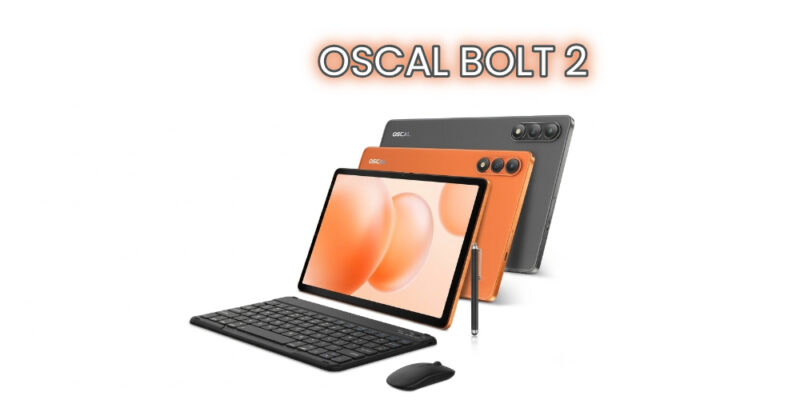
Key Highlights
- 11-inch HD IPS display with a 90Hz refresh rate.
- Unisoc T7250 octa-core processor with Mali-G57 GPU.
- 8GB or 3GB physical RAM configurations with 128GB storage.
- 8,300mAh battery with 18W charging and 10W reverse charging.
- Android 16-based DokeOS_P 5.0.
- 4G LTE connectivity and microSD expansion up to 2TB.
OSCAL has introduced the BOLT 2, a new budget Android tablet featuring an 11-inch 90Hz display, a Unisoc T7250 processor and an 8,300mAh battery. The tablet is designed for entertainment, online learning and everyday productivity, with features such as 4G connectivity, expandable storage and support for PC Mode 3.0.
The OSCAL BOLT 2 uses an IPS display with an HD resolution of 1280 x 800 pixels. It also carries TÜV SÜD low-blue-light certification and supports Widevine L1 for Full HD streaming on compatible services. The tablet runs DokeOS_P 5.0 based on Android 16 and includes DokeAI 2.0 features.
Another notable addition is its 10W reverse charging support, allowing the tablet to charge compatible accessories and other devices. OSCAL is also bundling productivity accessories, including a wireless keyboard, mouse and stylus, according to its product and store listings.
| Feature | Details |
|---|---|
| Brand | OSCAL (Blackview sub-brand) |
| Model | OSCAL BOLT 2 |
| Display | 11-inch HD IPS |
| Resolution | 1280 × 800 pixels |
| Refresh rate | 90Hz |
| Processor | Unisoc T7250 octa-core |
| GPU | Mali-G57 |
| RAM | 8GB / 3GB |
| Virtual RAM expansion | Up to 24GB / 9GB, respectively |
| Storage | 128GB |
| Expandable storage | Up to 2TB |
| Rear camera | 8MP |
| Front camera | 5MP |
| Battery | 8,300mAh |
| Charging | 18W wired |
| Reverse charging | 10W OTG |
| Operating system | DokeOS_P 5.0 based on Android 16 |
| Connectivity | 4G LTE, Wi-Fi 5, Bluetooth 5.0 |
| Speakers | Dual BOX speakers with Smart-K |
| Dimensions | 257 × 168.6 × 8.4mm |
| Weight | 567g |
| Colours | Sunset Orange, Space Grey |
| Global listed price | $249.99 for 8GB + 128GB |
Design and Build
The OSCAL BOLT 2 features a relatively slim design, measuring 257 × 168.6 × 8.4mm and weighing 567g. It is available in Sunset Orange and Space Grey colour options.
The tablet has an 11-inch display on the front, while its overall construction is designed for everyday entertainment and productivity. Its 567g weight makes it portable enough to carry in a backpack, although it is not particularly lightweight for extended one-handed use.
OSCAL is also promoting the tablet as a productivity-focused device. Its retail package listing highlights a wireless keyboard, mouse and stylus, which can make typing, document work and basic note-taking more convenient.
Display
The OSCAL BOLT 2 comes with an 11-inch IPS display offering an HD resolution of 1280 × 800 pixels and a 90Hz refresh rate.
The higher refresh rate should make scrolling through websites, navigating menus and moving between applications appear smoother than on a conventional 60Hz screen. However, the HD resolution is a limitation on an 11-inch panel. Text and fine details will not look as sharp as they do on tablets with Full HD or higher-resolution displays.
The display also has TÜV SÜD low-blue-light certification. OSCAL advertises three viewing options: Reading Mode, Night Light and Dark Mode, allowing users to adjust the screen according to their viewing preferences.
Another useful addition is Widevine L1 certification, which enables supported streaming applications to deliver content at up to 1080p, subject to the service and device’s playback compatibility.
Performance
The tablet is powered by the Unisoc T7250 octa-core processor, paired with a Mali-G57 GPU clocked at 850MHz.
The chipset uses two Cortex-A75 performance cores running at up to 1.8GHz and six Cortex-A55 efficiency cores running at up to 1.6GHz. This configuration is aimed at everyday activities such as web browsing, video streaming, online classes and light multitasking.
OSCAL offers two memory configurations: 8GB RAM with 128GB storage and 3GB RAM with 128GB storage. The company also advertises virtual RAM expansion of up to 24GB and 9GB, respectively.
It is important to distinguish virtual RAM from physical memory. RAM expansion uses a portion of internal storage and does not provide the same performance as additional physical RAM.
The tablet also supports microSD card expansion up to 2TB, allowing users to store more videos, documents and other files.
Camera
The OSCAL BOLT 2 features an 8MP rear camera and a 5MP front-facing camera.
The rear camera can be used for basic photography, document scanning and everyday captures, while the front camera is intended for video calls and online classes.
These camera specifications are relatively basic for a tablet, and independent camera testing will be needed to assess image quality and low-light performance.
Battery and Charging
The tablet packs an 8,300mAh battery, which is one of its main hardware highlights.
It supports 18W wired charging. Although this charging speed is suitable for a budget tablet, replenishing an 8,300mAh battery may take some time compared with devices supporting faster charging.
OSCAL also includes 10W OTG reverse charging. This feature allows the BOLT 2 to supply power to compatible smartphones and smaller accessories through a suitable wired connection.
The company advertises up to 7.5 hours of video playback, 8.6 hours of web browsing and 41 hours of music playback. These are manufacturer-provided figures rather than independently measured results, and actual battery life will vary with usage.
Software and AI Features
The OSCAL BOLT 2 runs DokeOS_P 5.0 based on Android 16 and includes DokeAI 2.0.
Its software features include PC Mode 3.0 and Split Screen 2.0, which are intended to make multitasking more convenient. PC Mode offers a desktop-style interface, while split-screen functionality allows supported applications to be used simultaneously.
OSCAL also advertises AI tools for photo editing, video creation and music-related features. Google Lens integration supports functions such as translating and identifying content through the camera.
However, the company has not specified a clear operating system upgrade commitment or security update period in the published specifications.
Connectivity and Special Features
The BOLT 2 supports dual 4G SIM connectivity, allowing users to access mobile data without relying entirely on Wi-Fi.
Other connectivity options include Wi-Fi 5, Bluetooth 5.0 and USB Type-C. The tablet also supports GPS, GLONASS, Galileo and BeiDou positioning systems.
For audio, it includes dual BOX speakers with Smart-K audio technology. A 3.5mm headphone jack is also reported in launch coverage.
Additional features include PC Mode 3.0, Split Screen 2.0, Widevine L1 support and microSD expansion up to 2TB.
Price and Availability
OSCAL has introduced the BOLT 2 in global markets with a listed price of $249.99(~ ₹23,500) for the 8GB RAM and 128GB storage configuration.
The tablet comes in Sunset Orange and Space Grey colour options. Its official online store lists the 8GB + 128GB version, while the manufacturer’s specification page also mentions a 3GB + 128GB configuration.
Competition and Alternatives
At its $249.99 listed price, the OSCAL BOLT 2 faces competition from established Android tablets.
| Alternative | Why Consider It? | Why Choose OSCAL BOLT 2? |
|---|---|---|
| Samsung Galaxy Tab A11+ | 11-inch Full HD+ 90Hz display and a stronger overall software ecosystem | 4G support, larger 8,300mAh battery and bundled accessories |
| Lenovo Tab M11 | 11-inch 1920 × 1200 display and stylus-focused use | Larger battery and advertised 4G connectivity |
The Samsung Galaxy Tab A11+ is particularly worth considering because its Full HD+ display offers higher resolution than the OSCAL tablet. The Lenovo Tab M11 is another option for buyers prioritising screen sharpness and note-taking.
Actual value comparisons depend on regional prices, storage configurations and included accessories.
Pros and Cons
Pros
- Large 11-inch display with a 90Hz refresh rate.
- 8,300mAh battery with reverse charging.
- 4G LTE connectivity.
- Expandable storage up to 2TB.
- Android 16-based software.
- Keyboard, mouse and stylus included in the advertised retail package.
Cons
- HD resolution is relatively low for an 11-inch screen.
- Unisoc T7250 is aimed at basic everyday usage rather than demanding gaming.
- 18W charging is relatively slow for the battery capacity.
- No confirmed long-term software update policy.
- Only 3GB physical RAM in the lower configuration.
Final Verdict: Should You Buy It?
The OSCAL BOLT 2 is positioned as an affordable Android tablet for users who want a large screen, cellular connectivity, expandable storage and a sizeable battery.
Its 8,300mAh battery, 90Hz display, 4G support and included productivity accessories make it relevant for students, casual users and people who regularly consume video content or work with documents.
However, its 1280 × 800 resolution is a significant compromise on an 11-inch screen. The Unisoc T7250 is also better suited to everyday tasks than demanding games or heavy productivity workloads.
Best for: Students, casual tablet users and buyers looking for a large-screen device with 4G connectivity.
Consider alternatives if: You want a sharper display, stronger gaming performance or a clearly defined long-term software support policy.
Bottom line: The OSCAL BOLT 2 offers a useful collection of budget-tablet features, but its HD display and entry-level processor mean buyers should compare it carefully with similarly priced Samsung and Lenovo tablets before purchasing.
FAQs
What is the price of the OSCAL BOLT 2?
The official store lists the 8GB RAM and 128GB storage version at $249.99.
Which processor powers the OSCAL BOLT 2?
It is powered by the Unisoc T7250 octa-core processor with a Mali-G57 GPU.
What is the battery capacity of the OSCAL BOLT 2?
It has an 8,300mAh battery with 18W wired charging and 10W reverse charging support.
Does the OSCAL BOLT 2 support 4G?
Yes. It supports dual 4G SIM connectivity.
Which Android version does the OSCAL BOLT 2 run?
It runs DokeOS_P 5.0 based on Android 16.








Comments