
 By
By 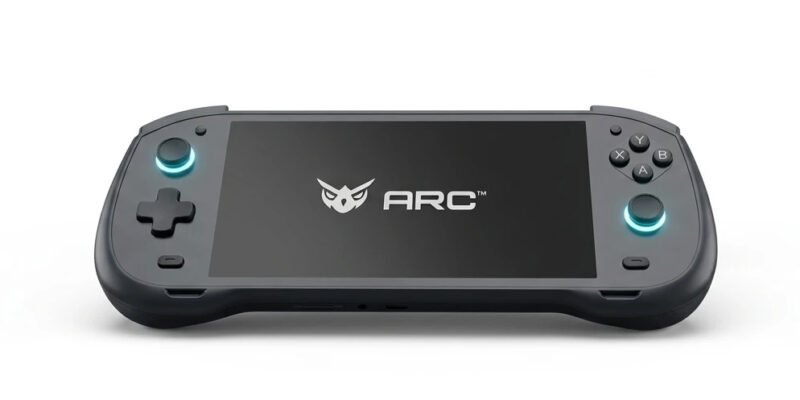
Key Highlights
- It features a 7-inch Full HD LTPS TFT LCD display with a 120Hz refresh rate.
- The device is powered by Qualcomm’s Snapdragon G2 Gen 2 Gaming Platform with 8GB RAM.
- It runs OwlOS, a custom Android-based operating system with per-game controls and performance settings.
- The handheld packs a 9,300mAh battery with 27W wired charging.
Homegrown gaming company Arc has entered the handheld gaming market with the Arc X1, a portable gaming device built around Qualcomm’s Snapdragon G2 Gen 2 Gaming Platform. The company has paired the chipset with a 7-inch 120Hz display, active cooling and controller hardware designed specifically for gaming.
Unlike Windows-based handheld PCs, the Arc X1 runs OwlOS, a custom operating system based on the Android Open Source Project. The software is designed to support Android games, emulators and cloud gaming while giving users control over performance profiles, fan behaviour, resolution scaling and game-specific controls.
| Feature | Details |
|---|---|
| Brand | Arc |
| Model | Arc X1 |
| Display | 7-inch LTPS TFT LCD |
| Resolution | 1,920 x 1,080 pixels |
| Refresh Rate | 120Hz |
| Aspect Ratio | 16:9 |
| Brightness | 500 nits typical |
| Colour Gamut | 100% sRGB |
| Protection | Corning Gorilla Glass 3 |
| Processor | Qualcomm Snapdragon G2 Gen 2 Gaming Platform |
| CPU | Octa-core Qualcomm Kryo |
| GPU | Adreno A22 |
| RAM | 8GB LPDDR5X, 8,533MT/s |
| Storage | 128GB UFS 3.1 |
| Expandable Storage | Up to 1TB via microSDXC |
| Operating System | OwlOS based on AOSP |
| Cooling | Active cooling with centrifugal fan |
| Analogue Sticks | TMR zero-drift sticks |
| Triggers | Hall-effect sensors with mechanical locks |
| Rear Buttons | 2 programmable buttons |
| Haptics | Dual LRAs |
| Battery | 9,300mAh |
| Charging | 27W wired |
| Connectivity | Wi-Fi 6E, Bluetooth 5.4 |
| Audio | Stereo speakers, 3.5mm headphone jack |
| Port | USB Type-C 3.1 |
| Weight | Around 500g |
| Price | ₹29,500 early access; ₹33,500 regular |
| Availability | India |
Design & Gaming Controls
The Arc X1 is built around a conventional handheld gaming layout, with analogue sticks, a D-pad, ABXY buttons and triggers integrated into the body.
One of its more notable hardware choices is the use of Tunnel Magnetoresistance (TMR) analogue sticks. Arc describes these as zero-drift sticks, while also providing built-in tools for calibration.
The analogue triggers use Hall-effect sensors and include mechanical trigger locks. Hall-effect sensing can reduce reliance on traditional physical contact mechanisms for detecting trigger movement, while the locks give players an option to shorten trigger travel for games where quicker inputs are useful.
There are also two programmable rear buttons, allowing users to assign additional controls without taking their thumbs away from the main sticks.
For feedback, the handheld uses dual Linear Resonant Actuators (LRAs) for haptic effects.
The combination of TMR sticks, Hall-effect triggers and programmable rear controls makes the controller hardware one of the Arc X1’s most important differentiators.
Display
The Arc X1 has a 7-inch Full HD LTPS TFT LCD with a 1,920 x 1,080 resolution and 16:9 aspect ratio.
The display supports a 120Hz refresh rate, which allows the interface and supported games to render at higher refresh rates than a conventional 60Hz handheld display. Whether a particular game actually reaches 120 frames per second will depend on the game and hardware workload.
Arc rates the screen at 500 nits of typical brightness and claims 100% coverage of the sRGB colour gamut. The panel is protected by Corning Gorilla Glass 3.
For gaming, the 16:9 aspect ratio also matches the format used by many Android games and streaming services, while Full HD keeps the resolution relatively straightforward for the Snapdragon platform to drive.
Performance & Cooling
The Arc X1 is powered by Qualcomm’s Snapdragon G2 Gen 2 Gaming Platform, built on a 4nm process.
The platform includes an octa-core Qualcomm Kryo CPU and an Adreno A22 GPU. It is paired with 8GB of LPDDR5X RAM running at 8,533MT/s and 128GB of UFS 3.1 storage.
Storage can be expanded by up to 1TB using a compatible microSDXC card, which is particularly useful for a handheld because modern games and emulated titles can consume considerable storage.
Arc has also fitted an active cooling system with a centrifugal fan. Air is drawn through rear vents and expelled through exhaust ports on the top of the device.
This is important because sustained gaming can place considerably more load on the processor than lighter Android applications. However, Arc’s specifications alone do not establish how the X1 performs in specific games or how consistently it maintains frame rates. Independent testing will be needed for that.
OwlOS: Android Designed Around Gaming
The Arc X1 runs OwlOS, Arc’s custom Android-based operating system built on AOSP.
The software is designed to make Android gaming feel more like a dedicated handheld experience rather than simply placing Android on a larger screen.
Users can create per-game performance and control profiles, remap controls and access tools for resolution scaling and frame-rate monitoring. OwlOS also allows users to customise fan curves and provides a Quick Resume feature.
The system supports Android games, emulators and cloud gaming services, giving the X1 a broader range of potential uses.
The amount of software optimisation and compatibility across individual games remains something that will become clearer through real-world use.
Battery & Charging
The Arc X1 packs a 9,300mAh battery and supports 27W wired charging.
Arc claims the handheld can provide more than eight hours of battery life in Silent Mode. This figure is a company claim and does not represent independently tested gaming endurance.
Actual battery life will vary considerably depending on the game, display refresh rate, brightness, performance settings and cooling profile.
The large battery is nevertheless important for a portable gaming device because demanding games can consume considerably more power than typical Android applications.
Connectivity & Other Features
The Arc X1 supports Wi-Fi 6E and Bluetooth 5.4 for wireless connectivity. It also includes USB OTG support and a USB Type-C 3.1 port.
For wired audio, there is a 3.5mm headphone jack, while built-in stereo speakers handle audio when headphones are not being used.
The device weighs approximately 500g, putting it within the expected range for a dedicated handheld gaming device while still being substantially larger than a conventional smartphone.
Price & Availability in India
The Arc X1 is being sold in India in two pricing tiers.
- Regular customers – ₹33,500
The Arc X1 is priced at ₹33,500 for regular customers in India, while people who joined Arc’s early waitlist can access it for ₹29,500. Early-access orders are scheduled to open on October 2.
The company has not provided separate regional pricing because the launch information supplied is focused on the Indian market.
Competition & Alternatives
The Arc X1 enters a market that includes Android handhelds as well as Windows-based gaming handheld PCs.
Android handhelds can be more convenient for mobile games, emulation and cloud gaming, while Windows handhelds generally provide access to a broader PC game library.
At ₹33,500, the Arc X1’s positioning therefore depends heavily on what the buyer wants to play.
| Alternative Type | Why Consider It? | Arc X1 Difference |
|---|---|---|
| Android gaming handhelds | Similar mobile gaming focus | OwlOS offers extensive per-game controls and performance settings |
| Windows gaming handhelds | Access to a large PC game library | Arc X1 uses Android and is built around a lighter gaming ecosystem |
| Gaming smartphone + controller | More versatile smartphone functionality | Arc X1 integrates dedicated controls and active cooling |
The Arc X1 makes more sense for someone who specifically wants a dedicated Android gaming handheld rather than a portable PC.
Final Verdict: Should You Buy It?
The Arc X1 is aimed at a specific type of gamer: someone who wants a dedicated Android handheld with physical controls, active cooling and extensive software customisation.
Its most interesting combination is the Snapdragon G2 Gen 2 platform, 120Hz display and controller hardware. The TMR sticks, Hall-effect triggers and programmable rear buttons give Arc plenty of hardware-focused features to highlight, while OwlOS adds game-specific performance and control profiles.
The biggest question is real-world performance. Arc has provided the hardware specifications and software features, but independent testing is still needed to establish how demanding Android games perform, how effective the cooling system is during extended sessions and how long the battery actually lasts under gaming workloads.
Best for: Android gamers, emulation users, cloud-gaming users and buyers looking for a dedicated gaming handheld rather than a conventional smartphone.
Consider alternatives if: You need access to a large PC game library, want a Windows-based handheld or prefer a more versatile device that doubles as a smartphone.
Bottom line: At ₹33,500, the Arc X1 stands out through its gaming-focused controls, 120Hz display, active cooling and custom Android software. Its long-term value will depend heavily on OwlOS optimisation and real-world gaming performance.





Comments