
 By
By 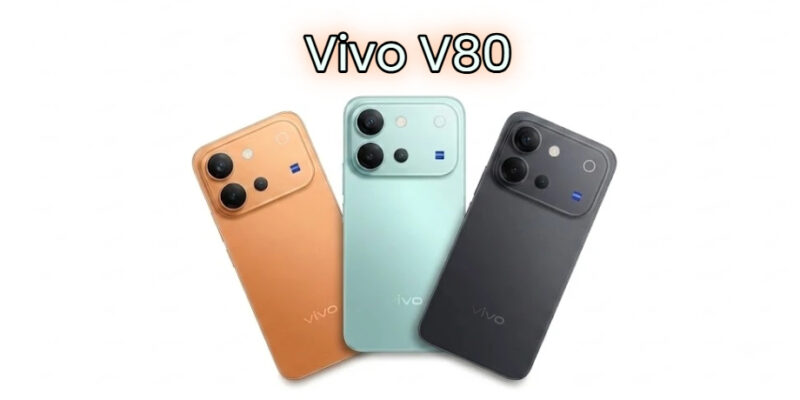
Key Highlights
- 6.59-inch 1.5K AMOLED display with up to 144Hz refresh rate
- Snapdragon 7 Gen 4 chipset with 8GB RAM
- 50MP ZEISS main camera, 50MP telephoto and 8MP ultrawide
- 7,200mAh battery with 90W FlashCharge
- Android 17-based OriginOS 7
Vivo has launched the V80 in India as the latest addition to its V-series lineup, focusing on photography, content creation and long battery life. The smartphone features a 6.59-inch 1.5K AMOLED display with a 144Hz refresh rate, a Snapdragon 7 Gen 4 chipset and a ZEISS-tuned triple rear camera system.
The Vivo V80 also packs a 7,200mAh battery with 90W FlashCharge, making battery capacity one of its key upgrades. It runs Android 17-based OriginOS 7 and includes AI-powered imaging tools aimed at users who regularly shoot, edit and share content.
| Feature | Details |
|---|---|
| Brand | Vivo |
| Model | Vivo V80 |
| India Launch Date | October 6, 2026 |
| Display | 6.59-inch 1.5K AMOLED |
| Resolution | 2750 × 1260 pixels |
| Refresh Rate | Up to 144Hz |
| Processor | Snapdragon 7 Gen 4 |
| RAM | 8GB LPDDR4X |
| Storage | 128GB / 256GB / 512GB UFS 3.1 |
| Rear Cameras | 50MP main + 50MP telephoto + 8MP ultrawide |
| Front Camera | 50MP ZEISS |
| Battery | 7,200mAh typical |
| Charging | 90W FlashCharge |
| Software | Android 17, OriginOS 7 |
| Connectivity | 5G, Wi-Fi, Bluetooth 5.4, NFC |
| Protection | IP68 + IP69 |
| Weight | 203g |
| Colours | Sunrise Anthem, Horizon Blue, Stellar Black |
| Price | Starts at ₹62,999 |
| Availability | From October 13, 2026 |
Design & Build
The Vivo V80 uses a glass back with a high-strength aluminium alloy frame and measures 157.52 x 74.33 x 7.69mm. At 203g, it remains relatively manageable despite carrying a 7,200mAh battery.
Vivo has also given the phone IP68 and IP69 ratings for dust and water resistance. This provides protection against dust and high-pressure water exposure under the specified testing conditions.
The phone is available in Sunrise Anthem, Horizon Blue and Stellar Black. It also features a 3D ultrasonic fingerprint sensor, which is more commonly associated with higher-end smartphones.
Display
The V80 features a 6.59-inch 1.5K AMOLED display with a 2750 x 1260-pixel resolution and up to a 144Hz refresh rate. The higher refresh rate can make scrolling and supported animations feel more fluid, while the 1.5K resolution provides a sharper image than standard Full HD+ panels.
The display supports the P3 wide colour gamut and has a claimed local peak brightness of up to 5,000 nits. Vivo also says the panel can reach 1,800 nits in high-brightness mode, which should help with outdoor visibility.
The 144Hz mode is useful for supported applications, although not every app necessarily runs at the maximum refresh rate.
Performance
Powering the Vivo V80 is Qualcomm’s Snapdragon 7 Gen 4, built using a 4nm process. It has an octa-core CPU configuration with a peak clock speed of 2.8GHz and is paired with 8GB of LPDDR4X RAM.
Storage options include 128GB, 256GB and 512GB using UFS 3.1 storage. This hardware should be suitable for everyday multitasking, social media, photography, video editing and gaming, although the Snapdragon 7 Gen 4 remains a premium mid-range platform rather than Qualcomm’s flagship Snapdragon 8 series.
The phone runs OriginOS 7 based on Android 17, giving it Vivo’s latest software experience.
Camera
Camera performance is one of the main reasons to consider the Vivo V80. The rear setup combines a 50MP main camera with OIS, a 50MP ZEISS night telephoto camera with OIS and an 8MP ultrawide camera.
The telephoto camera supports 3x optical zoom, giving the V80 a dedicated lens for portraits and distant subjects instead of relying entirely on digital cropping. Vivo also supports up to 10x Zoom-In Portrait and up to 100x digital zoom.
For video, the phone supports 4K recording, including 4K 60fps capture and 4K Cinematic Video. The latter adds three movie-inspired styles for users who want a more stylised look directly while recording.
On the front is a 50MP ZEISS selfie camera with autofocus. Vivo has also added more than 30 AI-powered creative features, including AI Diwali Portrait 2.0, AI Retouch, Color Palette and Live Sticker Collage.
These features make the V80 more focused on content creation than simply competing on camera megapixel numbers.
Battery & Charging
The Vivo V80 packs a 7,200mAh battery, the largest battery capacity Vivo says it has used in a V-series smartphone in India. The battery is rated at 7,015mAh minimum capacity.
It supports 90W FlashCharge, which gives the phone a combination of high battery capacity and relatively fast wired charging. The larger battery should be particularly useful for users who spend significant time recording video, using navigation, gaming or consuming media.
There is no wireless charging support listed for the device.
Software & AI
The Vivo V80 is one of the first Vivo smartphones to launch with OriginOS 7 based on Android 17 in India.
The software experience is closely tied to the phone’s camera and content-creation positioning. AI features include AI Retouch, which can remove unwanted objects and enhance images, while Color Palette provides additional control over image tone and colour.
Vivo is also offering extended software support, with the company promising up to four Android OS upgrades and six years of security updates.
Connectivity & Special Features
Connectivity includes 5G, dual-SIM support, Wi-Fi, Bluetooth 5.4, NFC, GPS and a USB Type-C port. The phone uses USB 2.0 rather than a faster USB standard.
Other features include an infrared blaster, X-axis linear motor, 3D ultrasonic fingerprint sensor and IP68/IP69 protection.
Price & Availability
The Vivo V80 is available in three configurations in India:
- 8GB + 128GB – ₹62,999
- 8GB + 256GB – ₹69,999
- 8GB + 512GB – ₹79,999
The phone comes in Sunrise Anthem, Horizon Blue and Stellar Black. Sales begin October 13, 2026, through Vivo’s online store, Amazon India, Flipkart and offline retail channels.
Launch benefits include selected bank cashback, exchange bonuses, Easy EMI options and six months of 100GB Google One storage.
Competition & Alternatives
| Alternative | Why Consider It? | Why Choose the Vivo V80 Instead? |
|---|---|---|
| OnePlus 15R | Stronger performance focus | Larger battery and ZEISS camera system |
| iQOO 15R | Better suited to performance-focused buyers | More emphasis on photography and content creation |
| Samsung Galaxy A-series alternatives | Strong software ecosystem | Faster charging and larger battery |
The biggest challenge for the V80 is its positioning. At ₹62,999, it enters a segment where buyers can find phones with faster flagship-class processors. Vivo therefore needs its camera system, battery and software experience to justify the premium.
Pros & Cons
Pros
-
7,200mAh battery: One of the V80’s strongest advantages, particularly for heavy users.
-
ZEISS camera system: Dedicated telephoto and OIS-equipped main camera give it a more versatile setup than phones relying only on wide and ultrawide cameras.
-
144Hz AMOLED display: The high refresh rate benefits scrolling and supported applications.
-
90W charging: Helps offset the time required to charge such a large battery.
-
IP68 + IP69 protection: Adds useful protection against dust and water.
-
Long software support: Up to six years of security updates improves its long-term ownership proposition.
Cons
-
High starting price: At ₹62,999, the V80 competes with phones offering more powerful flagship-class chipsets.
-
Snapdragon 7 Gen 4: Capable for everyday use, but not the strongest option at this price.
-
USB 2.0: The Type-C port does not provide the faster transfer speeds available on some competing premium phones.
-
No expandable storage: Buyers need to choose their storage tier carefully.
-
No wireless charging: This is a notable omission for a phone positioned in the premium segment.
Final Verdict: Should You Buy It?
The Vivo V80 is primarily aimed at users who want a camera-focused premium smartphone with a very large battery. Its ZEISS camera system, dedicated telephoto lens, 4K cinematic video tools and AI photography features give it a clear identity beyond its processor.
The 7,200mAh battery and 90W charging are equally important, particularly for people who spend long hours shooting photos and videos, travelling or consuming content.
However, the ₹62,999 starting price makes the V80 harder to recommend purely for performance. Buyers who prioritise gaming or raw processing power should compare it with phones using higher-end chipsets.
Best for: Photography enthusiasts, content creators and users who prioritise battery life.
Consider alternatives if: You want the fastest performance or flagship-level processing at this price.
Bottom line: The Vivo V80 makes the most sense when its camera system, huge battery and content-creation features are more important to you than having the fastest chipset in the segment.
FAQs
What is the Vivo V80 price in India?
The Vivo V80 starts at ₹62,999 for the 8GB RAM + 128GB storage variant.
What processor does the Vivo V80 use?
The Vivo V80 is powered by Qualcomm’s Snapdragon 7 Gen 4 chipset, built on a 4nm process.
How large is the Vivo V80 battery?
The phone has a 7,200mAh typical-capacity battery and supports 90W FlashCharge.
What cameras does the Vivo V80 have?
It has a 50MP OIS main camera, a 50MP ZEISS telephoto camera with OIS, an 8MP ultrawide camera and a 50MP ZEISS autofocus selfie camera.
Which software does the Vivo V80 run?
The Vivo V80 runs OriginOS 7 based on Android 17. Vivo promises up to four Android OS upgrades and six years of security updates.




Comments