
 By
By 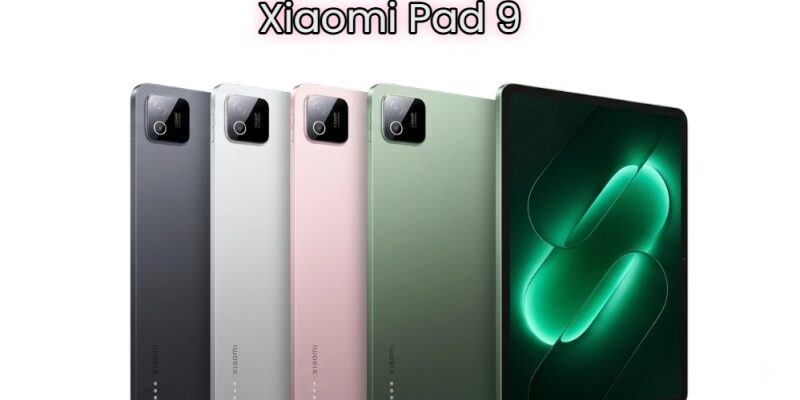
Key Highlights
- 11.2-inch 3.2K display with up to 144Hz adaptive refresh rate
- Snapdragon 8s Gen 4 chipset
- 9,720mAh battery with 45W wired charging
- HyperOS 4 with PC-class productivity applications
- Super XiaoAI 2.0 AI assistant
- Supports Xiaomi Focus Stylus Pr
Xiaomi has launched the Xiaomi Pad 9 in China, adding a new high-performance tablet to its Pad lineup. The tablet combines an 11.2-inch 3.2K display with an adaptive 144Hz refresh rate, Qualcomm’s Snapdragon 8s Gen 4 chipset, a 9,720mAh battery and 45W wired charging.
The Xiaomi Pad 9 is positioned as a productivity and entertainment tablet rather than simply a large-screen media device. Xiaomi is also pushing PC-class applications, HyperOS 4 multitasking and its Super XiaoAI 2.0 assistant, while support for the Xiaomi Focus Stylus Pro gives the tablet a more useful role for note-taking and creative work.
The Xiaomi Pad 9 is primarily designed to deliver high-end performance and a fast, high-resolution display in a more affordable productivity-focused tablet. Its strongest selling points are the Snapdragon 8s Gen 4 platform, 3.2K 144Hz screen and large battery rather than camera hardware.
| Feature | Details |
|---|---|
| Brand | Xiaomi |
| Model | Xiaomi Pad 9 |
| Launch Market | China |
| Launch Date | September 14, 2026 |
| Display | 11.2-inch LCD |
| Resolution | 3.2K |
| Refresh Rate | Up to 144Hz adaptive |
| Brightness | Up to 1,000 nits |
| Processor | Qualcomm Snapdragon 8s Gen 4 |
| RAM | 8GB / 12GB |
| Storage | 128GB / 256GB |
| Rear Camera | 13MP |
| Front Camera | 8MP |
| Battery | 9,720mAh |
| Charging | 45W wired, 22.5W reverse charging |
| Operating System | HyperOS 4 |
| Connectivity | Wi-Fi, Bluetooth, USB Type-C |
| Stylus Support | Xiaomi Focus Stylus Pro |
| Colours | Silver, Cloud Cedar Green, Black, Ice Peach Pink |
| Starting Price | CNY 2,999 |
| Availability | Pre-orders open in China |
Design & Build
Xiaomi has kept the Pad 9 focused on a conventional large-screen tablet design, with the hardware built around its 11.2-inch panel. The available colours include Silver, Cloud Cedar Green, Black and Ice Peach Pink.
The more important part of the design is how Xiaomi has positioned the tablet as a productivity device. Rather than relying only on the touchscreen, the Pad 9 supports the separately sold Xiaomi Focus Stylus Pro, allowing users to take handwritten notes, annotate documents or work on compatible creative applications.
Xiaomi has not positioned the Pad 9 as a rugged tablet, and there is no confirmed IP rating in the launch information available so far. Buyers should therefore treat it as a conventional productivity and entertainment tablet rather than a device designed for harsh environments.
Display
The Xiaomi Pad 9 uses an 11.2-inch 3.2K display with an adaptive refresh rate of up to 144Hz and peak brightness of 1,000 nits.
The high resolution should be particularly useful for documents, web pages and detailed images, while 144Hz gives the interface more headroom for smooth scrolling and supported games. The adaptive nature of the refresh rate is also more useful than simply having a fixed high-refresh mode because the tablet can adjust refresh behaviour depending on the content.
The 1,000-nit peak brightness should help with visibility in brighter surroundings, although peak brightness figures do not necessarily represent sustained brightness across the entire screen.
For video consumption, the large 11.2-inch panel provides considerably more viewing area than a smartphone. For productivity, the combination of resolution and screen size is more meaningful because it allows more content to remain visible while working with documents or multiple applications.
Performance
The Xiaomi Pad 9 is powered by Qualcomm’s Snapdragon 8s Gen 4, placing it well above the typical mid-range tablet performance class. Xiaomi is pairing the processor with up to 12GB of RAM, depending on configuration.
The Snapdragon platform should give the Pad 9 enough hardware headroom for demanding multitasking, high-resolution media work and games. However, the tablet has only just launched, so independent benchmark and sustained gaming testing is not yet available.
That distinction matters. The specifications indicate a capable performance platform, but real-world thermal behaviour, sustained performance and battery consumption under heavy workloads should be judged after independent testing.
Xiaomi is also using the hardware for productivity. The Pad 9 supports PC-class applications including WPS for Pad, Jianying Pro, PixelCake, ZWCAD and CAJ Reader, giving the tablet a broader role than basic browsing and entertainment.
Camera
The Pad 9 has a 13MP rear camera and an 8MP front camera. These specifications make the camera system more suitable for everyday scanning, video calls and casual photography than for serious photography.
On a tablet, the front camera is arguably more important than the rear camera for many users because video meetings and online classes are common use cases. The 13MP rear camera can handle document scanning and occasional photos, but Xiaomi is clearly not positioning the Pad 9 as a camera-first device.
There is currently no independent camera testing available for the newly launched model, so image-quality conclusions would be premature.
Battery & Charging
The Xiaomi Pad 9 packs a 9,720mAh battery with support for 45W wired fast charging and 22.5W reverse charging. Xiaomi claims up to 14.5 hours of short-video playback and up to 20 hours of online meetings, although these are manufacturer claims rather than independently measured results.
The large battery should make the Pad 9 well suited to long study sessions, meetings, travel and media consumption. Reverse charging also gives the tablet some flexibility as a power source for compatible accessories or smaller devices.
Actual endurance will depend on brightness, refresh rate, wireless connectivity, application load and other usage conditions.
Software & AI
The Xiaomi Pad 9 runs HyperOS 4, with Xiaomi adapting the software for larger-screen productivity. The company says the tablet supports PC-class applications, including WPS for Pad and other professional-oriented apps.
Xiaomi has also added its Super XiaoAI 2.0 AI assistant. The tablet supports AI-oriented features through Xiaomi’s software ecosystem, although the availability and functionality of individual AI tools can vary by software version and region.
The Pad 9 also supports the Xiaomi Focus Stylus Pro, which is sold separately. This expands the tablet’s usefulness for handwritten notes, drawing and document annotation.
Connectivity & Special Features
The Pad 9 is designed primarily as a Wi-Fi tablet and supports wireless connectivity alongside USB-C. Its standout software feature is the combination of HyperOS 4 and PC-class applications.
Stylus support is another important addition. Users who purchase the Focus Stylus Pro can use the tablet for digital writing and creative tasks, making it more competitive as a laptop companion or study device.
The tablet also supports Xiaomi’s ecosystem of productivity applications, which could be particularly useful for existing Xiaomi users.
Price & Availability
The Xiaomi Pad 9 has launched in China, and pre-orders are currently open. Xiaomi has announced the following configurations:
- 8GB + 128GB – CNY 2,999 (approx. ₹42,800)
- 8GB + 256GB – CNY 3,299 (approx. ₹47,000)
- 12GB + 256GB – CNY 3,799 (approx. ₹54,000)
- 8GB + 256GB Soft-Light Edition – CNY 3,499 (approx. ₹49,900)
The Xiaomi Pad 9 is available in Silver, Cloud Cedar Green, Black and Ice Peach Pink. The Focus Stylus Pro is available separately.
At the time of writing, Xiaomi has not announced an India launch or global availability for the Pad 9. The confirmed market is China.
Competition & Alternatives
The Xiaomi Pad 9 enters a segment where several premium Android tablets already offer high-refresh displays and powerful processors.
| Alternative | Why Consider It? | Why Choose Xiaomi Pad 9 Instead? |
|---|---|---|
| OnePlus Pad 3 | 13.2-inch 144Hz display and Snapdragon 8 Elite | Smaller 11.2-inch format and lower China starting price |
| Samsung Galaxy Tab S11 | AMOLED display, S Pen ecosystem and mature software support | Lower starting price in China and Snapdragon 8s Gen 4 performance platform |
| Xiaomi Pad 8 | Similar Xiaomi software ecosystem and lower positioning | Newer generation hardware and HyperOS 4 |
The OnePlus Pad 3 is an especially relevant alternative for Indian buyers because its 12GB + 256GB model is currently listed at ₹49,999, with a 13.2-inch 144Hz display and Snapdragon 8 Elite.
The Galaxy Tab S11 is a more premium alternative, with Samsung’s China pricing starting at CNY 5,999, but it brings an AMOLED display and Samsung’s broader tablet ecosystem
Pros & Cons
Pros
- 3.2K 144Hz adaptive display
- Snapdragon 8s Gen 4 chipset
- Large 9,720mAh battery
- 45W wired charging
- HyperOS 4 with tablet-focused productivity features
- Support for Focus Stylus Pro
- Multiple RAM and storage configurations
Cons
- Global and India availability is not confirmed
- Stylus is sold separately
- LCD panel rather than AMOLED
- Camera hardware is relatively basic for a premium tablet
- Independent performance and battery testing is not yet available
Final Verdict: Should You Buy It?
The Xiaomi Pad 9 makes the most sense for users who want a fast Android tablet with a high-resolution, high-refresh display without moving into the highest premium price tier.
Its biggest strengths are the combination of the Snapdragon 8s Gen 4 chipset, 3.2K 144Hz display and 9,720mAh battery. The HyperOS 4 productivity features and support for PC-class applications also give it a more practical role for students, office users and creators.
However, the Pad 9 is not necessarily the best option for everyone. Buyers who prioritise an AMOLED display, a mature global ecosystem or a larger productivity screen should look at alternatives such as Samsung’s Galaxy Tab S11 or OnePlus Pad 3.
Best for: Students, productivity users, media consumers and buyers who want strong tablet performance with a high-refresh display.
Consider alternatives if: You need an India/global launch, AMOLED, stronger camera hardware or a larger display.
Bottom line: The Xiaomi Pad 9 is a performance-focused Android tablet with a particularly strong display and battery combination. Its biggest unanswered question is not the hardware but its availability outside China.
FAQs
What is the Xiaomi Pad 9 price in China?
The Xiaomi Pad 9 starts at CNY 2,999 for the 8GB + 128GB configuration. The 8GB + 256GB model costs CNY 3,299, while the 12GB + 256GB version costs CNY 3,799.
When was the Xiaomi Pad 9 launched?
The Xiaomi Pad 9 was launched in China on September 14, 2026, alongside the Xiaomi Pad 9 Pro. Pre-orders are now open.
Does the Xiaomi Pad 9 have a 144Hz display?
Yes. The tablet has an 11.2-inch 3.2K display with up to a 144Hz adaptive refresh rate and up to 1,000 nits peak brightness.
What processor does the Xiaomi Pad 9 use?
The Xiaomi Pad 9 is powered by Qualcomm’s Snapdragon 8s Gen 4 chipset.
Is Xiaomi Pad 9 coming to India?
Xiaomi has not confirmed an India launch for the Pad 9 yet. Its confirmed launch market is China.




Comments